


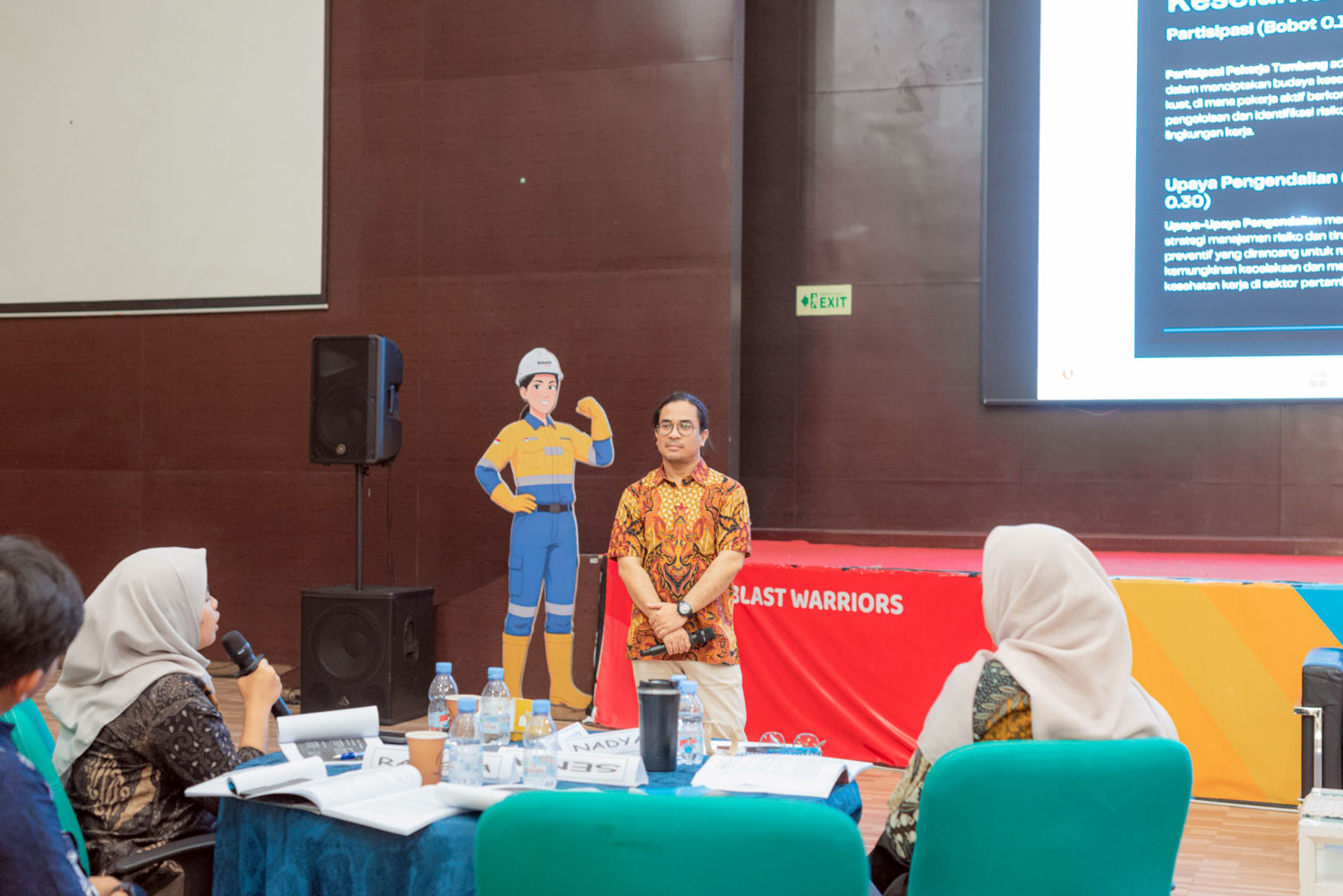
PT Dahana recently held a “Safety Maturity Level” workshop aimed at enhancing the Occupational Health and Safety (OHS) culture and deepening the understanding of OHS implementation, particularly at project sites adhering to the Mining Safety Management System (SMKP). This three-day event took place from December 3 to 5, 2025, at the Dahana Campus Auditorium in Subang, West Java. On the first day, the company invited Agung Pribadi, an assessor from the Indonesian Mining Experts Association (LSP Perhapi), to lead the workshop.
Dewi Kurniaty, PT Dahana’s General Manager of OHS and Environment, emphasized that the workshop is a vital step in strengthening the existing OHS culture within the company. She highlighted that it serves as both a refresher for employee knowledge and a means to enhance overall resilience.
“This workshop is part of our commitment to maintain and elevate safety maturity levels, ranging from basic to resilient, across all PT Dahana project sites. We hope that all Dahana employees will adhere to the regulations, ultimately boosting consumer confidence in our services,” stated Ms Kurniaty.
During his presentation, Agung Pribadi outlined that the workshop’s purpose is to standardize Mining Safety (KP) performance assessments, follow up on the Mining Safety Management System (SMKP), and assist the company in identifying and effectively managing potential risks in its operations.
Mr Pribadi also detailed the five levels of Safety Maturity, which serve as benchmarks for evaluating company performance. These levels are: Basic (score <0.50), Reactive (0.50-0.69), Planned (0.70-0.79), Proactive (0.80-0.89), and the highest level, Resilient (score >0.90).
He further explained the technical aspects of the Mining Safety Performance (KP) Achievement Level Assessment, including performance milestones, management roles, control efforts, and the analysis of accidents, illnesses, and hazardous events, as well as how to effectively utilize the assessment results.
Ms Kurniaty expressed her hope that the technical knowledge gained from the speakers would be actively implemented by participants at all operational levels. She underscored that Occupational Health and Safety (OHS) should not be regarded merely as an administrative obligation but as an integral part of Dahana’s culture.
“I encourage all participants to fully utilize the knowledge gained from this workshop. Occupational Health and Safety (OHS) is Dahana’s top priority, as our employees and the environment are invaluable assets to the company. We hope this initiative will positively impact and support Dahana’s sustainable operations,” concluded Ms Kurniaty.